Definition of Electricity
A definition of electricity can be explained in this way, atoms are small particles and, in short, they are the basic components of everything around us, whether our chairs, desks or even our own body.
Atoms are made up of even smaller elements, called protons, electrons and neutrons. When electric and magnetic forces move electrons from one atom to another, an electric current is formed.
In simple terms, electricity is the interaction of protons in the atom and the rapid movement of electrons around it. It is the flow of electrons.
Electricity is a form of energy. Electricity is the flow of electrons. All matter is composed of atoms, and an atom has a center, called a nucleus. The nucleus contains positively charged particles called protons and uncharged particles called neutrons.
The nucleus of the atom is surrounded by negatively charged particles called electrons. The negative charge of the electron is equal to the positive charge of the proton, and the number of electrons in an atom is equal to the number of protons.
When the equilibrium force between protons and electrons is altered by an external force, an atom may gain or lose an electron. When electrons are “lost” from an atom, the free movement of these electrons constitutes an electric current.
Electricity is a basic part of nature and is one of our most widely used forms of energy.
We obtain electricity, which is a secondary energy source, from the conversion of other energy sources, such as coal, natural gas, oil, nuclear energy and other natural sources, which are called primary sources. Many cities and towns were built next to waterfalls (a primary source of mechanical energy) that turned the water wheels to get the job done.
Before electricity generation began just over 100 years ago, houses were lit with kerosene lamps, food was cooled in ice boxes, and rooms were heated with wood or charcoal stoves.
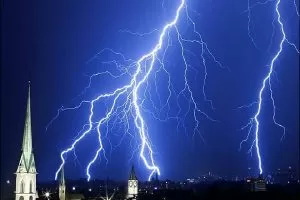
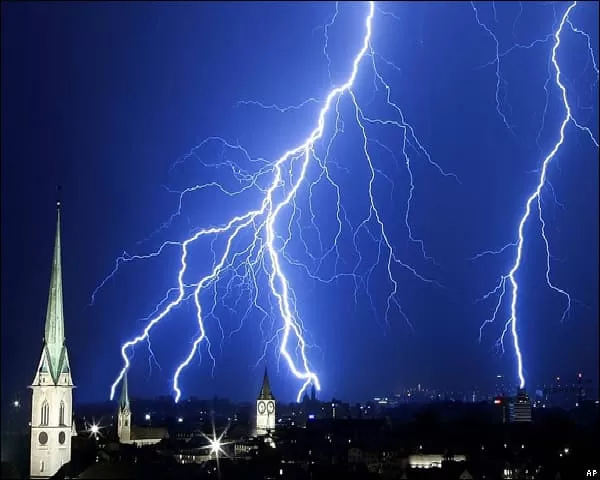
Beginning with Benjamin Franklin’s experiment with a kite on a stormy night in Philadelphia, the principles of electricity were gradually understood. In the mid-1800s, everyone’s life changed with the invention of the light bulb.
Before 1879, electricity had been used in arc lights for outdoor lighting. The invention of the light bulb used electricity to bring indoor lighting to our homes.
Related Topics To The Electricity in ALPHAPEDIA
HISTORY OF ELECTRICITY SUMMARY
💚 WHAT IS INDUSTRIAL ELECTRICITY ?
💚 WHAT IS STATIC ELECTRICITY ?
WHAT DOES ELECTRICITY MEAN ?
ORIGIN OF ELECTRICITY
HOW ELECTRICITY WAS DISCOVERED ?
Topics Relateds With Definitions in ALPHAPEDIA

LIBRARY DEFINITION

CELL PHONE DEFINITION

DEFINITION OF ARGUMENT

DEFINITION OF SELF-ESTEEM
INOCULATING LOOP DEFINITION
DEFINITION OF BIOLOGY
Other Topics of Interest in ALPHAPEDIA

FREE ONLINE PAINTING COURSE

BACHELOR IN BUSINESS ADMINISTRATION ABBREVIATION
FREE MEDITATION COURSE

HERACLES GOD: Meaning, Powers and Attributes
DEFINITION OF BIOLOGY
FREE SOCIAL ETIQUETTE COURSE
Image of Electricity